

Daniel Egneus
Daniel has long been celebrated for his vibrant, fantastical, dreamlike illustrations.
His professional collaborations have spanned the globe, and he’s worked with clients ranging from BMW to Chanel, Harper Collins to Departures, and so many others in between. Most recently he’s been illustrating an ongoing series of restaurant reviews for the Financial Times, and his children’s book, “Lubna and Pebble,” was featured in the Atlantic’s “65 Essential Children’s Books”. He invited us into his studio in Athens for a chat…
1. When/How did you discover your love for visual art?
Through comics and book illustrations as a child. You suddenly have the urge to draw and visualize your own ideas and I started to draw small comics. Not sure how it really happens, it was a very natural instinct for me as a child and it felt like the most fun thing in the world so it's not really a discovery, it's just there. I always think it's like singing in the shower, it's just a very fun thing to do and you don't really ask yourself why you do it.
2. How did you become a professional illustrator?
It was before the internet and cell phones so I booked appointments through the yellow pages with publishers, magazines and advertising agencies in Stockholm, where I’m from, and took my portfolio on the metro and went around showing my work. If only one could have imagined the internet back then! Just thinking about the time it took to even show my work to one client, compared to now... But it was nice to meet clients, which doesn’t happen so much these days. Also I remember using a fax to send my sketches – I had to spell out which colours I wanted to use, since you couldn’t see colors via fax.
3. What is your preferred medium and why?
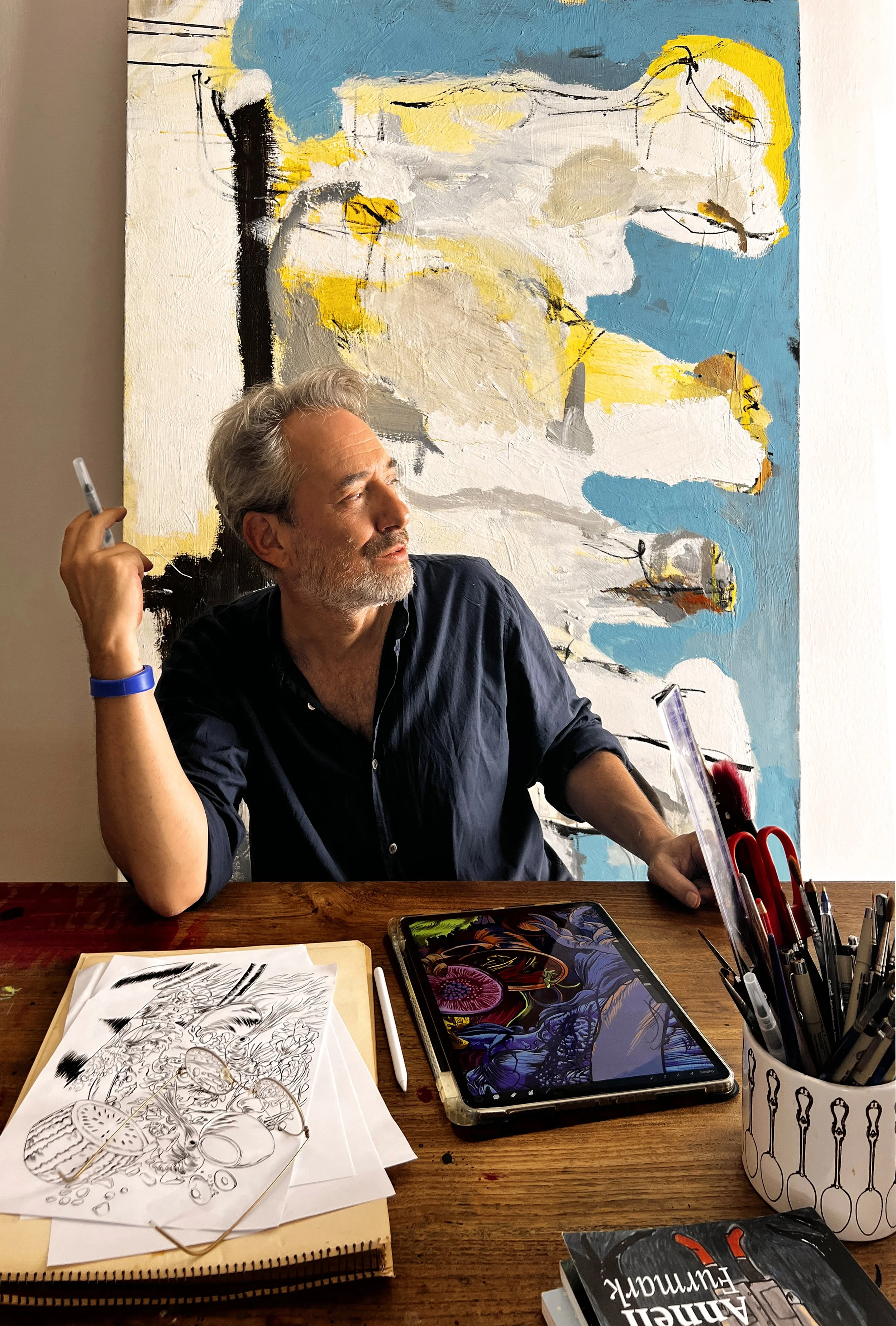
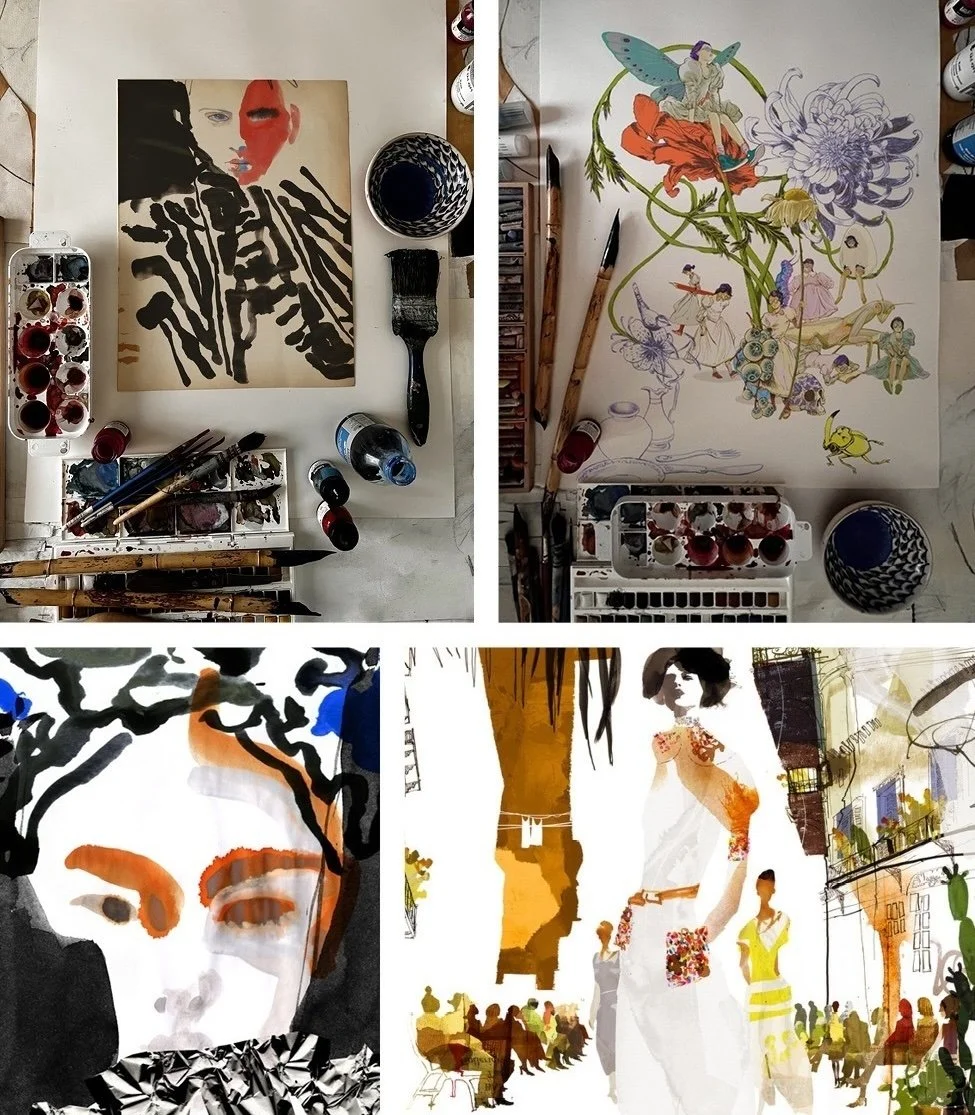
Inks and acrylics and collage and crayons, all the basic stuff, plus my IPad.
4. How did you develop your unique style?
I think it's mostly organic, you draw and you discover new things. Other interests may inform your subject matter and you try to develop a style that can express those thoughts and ideas and so it goes on and on. I feel I have returned to how I wanted to draw when I was 15 but wasn’t really capable to do back then. For many years I was more oriented towards fashion, beauty and lifestyle but I got very tired of the lack of narrative in my own drawings, so I’ve come back to work I did when I was much younger and when it was more pure drawing and imagination.
5. Your projects span editorial, storybooks, animation, etc. How different are the processes for creating such a wide range of work?
Illustrating books is a long process which includes developing narratives and creating characters, while editorial assignments have a very short deadline with no continuity yet must express ideas and concepts within the visuals. I like both fast and slow.
6. You've been doing an ongoing series of illustrations accompanying restaurant reviews for the Financial Times. How did you develop this unique relationship?
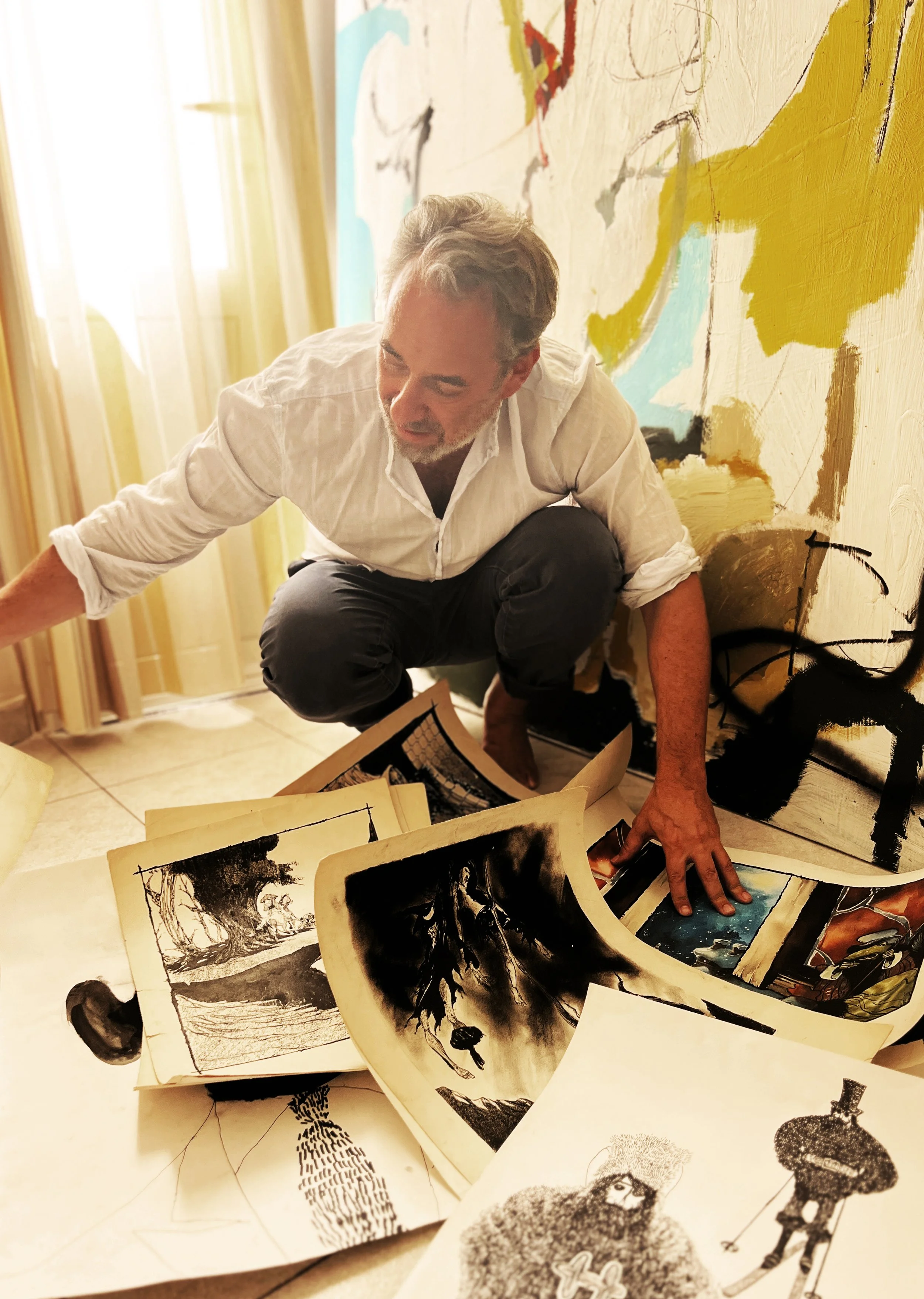
As it almost always happens it's the Art Director that contacts you, in this case Brian Saffer at FT. The restaurant reviews are written by the very British, very brilliant and quite hilarious Jay Rayner. The work is published every Saturday in their weekend edition, and his text is so suggestive of imagery and ideas, so it's always very inspiring and fun for me to add a visual narrative to complement and hopefully add to the text. It's more trying to complete versus compete with the text, and not just drawing literally what he is writing. We have done it for forty weeks in a row now and on a practical level it does demand some planning ahead, especially when you have a lot of other projects running at the same time or you have a short vacation.
7. How long have you lived in Athens?
About 12 years. Before thatI lived in Italy for about fifteen years, in Rome and Milano, and before that in London.
8. What about Athens inspires you?
I think it's mostly just everyday living and people that rubs off on you, and of course you naturally filter and absorb what is around you. I'm still quite Scandinavian in my subject matter, for example. I still prefer to draw Scandi forests. I think I remain quite Scandinavian because I actually don't live there, so it’s possibly some form of nostalgia as I do find I miss it there, especially as I grow older.
9. What does a typical work day look like for you?
I wake up at around 7 am and start to work so i I hopefully will be finished around 3-4 pm. Those are my typical office hours, although that's not written in stone. Sometimes when there's a lot to do it can just stretch on for forever…the sun goes up and the sun goes down and you're still sitting and working, especially when you don't get it right.
10. Where is your studio?
Now I am working from home in a separate room in my apartment.
11. What are some things you have to have in your studio?
Really just the tools I need for work: pencils, crayons, brushes, colours, papers. In all my studios I have had a sofa where you can take a nap, which is really useful.
12. What else (art, music, science, literature) has been inspiring you lately?
I have been to Corfu a lot lately since my partner is from there and she drew my attention to the brilliant Victorian British author and artist Edward Lear who lived there. He was both an ornithological draughtsman and a very fun drawer with nonsense poems but prone to severe melancholia which he referred to as "the Morbids". The Greek director Yorgos Lanthimos’ movie Poor Things was extremely inspiring to me visually, in terms of both the set designs and the custom costumes made by Holly Waddington.
13. What are your favorite types of illustration jobs?
I think the Financial Times/FT Weekend job with Jay Rayner comes closest to an ideal illustration job: there’s always a great, rich text where you can explore lots of ideas and draw very freely, also an Art Director who really just wants you to do exactly that. The children's books I do with Bloomsbury are another favourite, but it's obviously a very different process with much longer deadlines. A thing that I appreciate with both these jobs is that you get to know the people you work with so you also develop a human relationship with them. That's important to me because we are all sitting in different parts of the world and it can get quite isolated in this age and era of freelancing and remote work. I have some Art Directors I have worked with for a long time which is always a pleasure because you work more easily and you know their taste and you have some nice conversations and private exchanges as well while working.
14. What do you wish people knew about your work?
That it takes much longer to do than it may seem.
15. What advice would you give to an illustrator at the beginning of their career?
Don't throw tantrums in E-mails when a client doesn't like your artwork, let the agent handle that part and always show a united front with your agent, it will work way better.