

Dror Cohen
Dror’s bold, dreamlike gouache paintings have been recently commissioned by The Atlantic, Bon Appetit Magazine, Hermes, The Washington Post, and The Metrograph Theater. She invited us into her London studio for a chat…
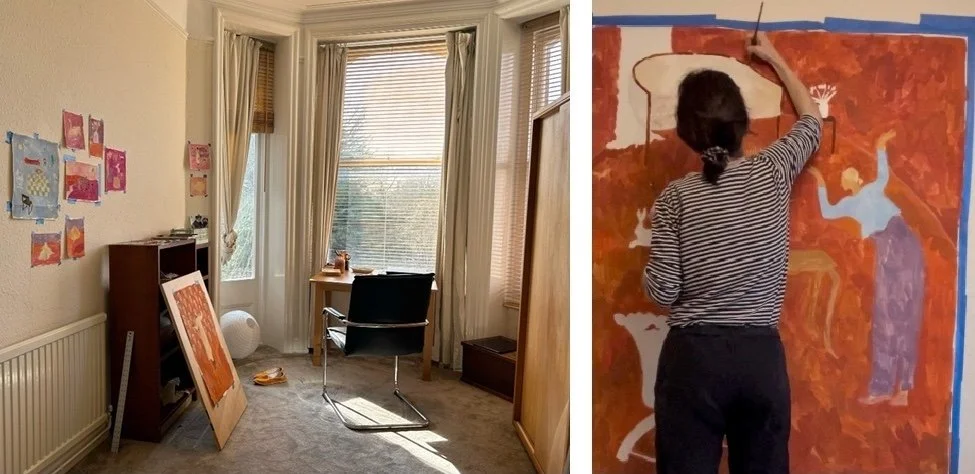
1. How did you fall in love with art and illustration? Did you have any major inspirations?
I know this is probably the most typical answer, but—I’ve always loved drawing and stories. I never really thought of it as a job until pretty late, maybe because I just didn’t spend much time thinking about what I’d do for work. But I also had great examples around me, which made it feel natural—my grandmother was a wedding dress seamstress, and my mom is a ceramic artist, so I spent a lot of time as a kid watching them work.
2. How did you make the transition from artist/art lover to professional illustrator?
I studied graphic design and illustration and, during my studies, I discovered that I also love typography. When I finished school and moved to New York, I thought I wanted to be a book designer. I worked for a bit at a small publishing house—it was nice, and the people were great, but I realized I wanted to draw more.
Every now and then, I’d send friendly emails to art directors with some of my work. Usually I wouldn’t get a response, but the first time someone actually replied they ended up giving me my first job, and this opened the door to more opportunities.
3. What advice do you give to new illustrators who are trying to navigate the industry?
When I was studying, I didn’t have a clear style and I wasn’t even sure what I was looking for. Even after graduating, I kept experimenting for a while, which helped me figure out what interests me, what kind of process suits me, and just got me to try a lot of different things. So if you can give yourself that time, I think it’s really valuable. Of course, I kept learning and evolving afterwards too, but it’s different when you’re not committed to a client or rushing to meet a deadline. So maybe the most important thing is to make time—especially between projects—for personal work, things you want to create just for yourself, without a client in mind. I feel like that also leads to more opportunities for commissioned projects that I really love to do.
4. What makes London special to you, does it inspire your work? Are there any other cities or specific locations that always inspire you?
I don’t know London well enough yet—I only moved here less than a year ago. Before that, I lived in New York for five years, right next to Riverside Park. Now, in London, I also live by a big park, Hampstead Heath. I love that there’s so much to see and do in the city, but the nature here is really important to me. It’s always a source of ideas, helps me feel more at home, and brings a nice balance to city life. Even though my color palette is not always realistic, I think the light and colors of where I am influence my work—maybe more in terms of atmosphere than anything else. And one small, specific thing—I love visiting great houses here, taking pictures of the large spaces and furniture.
5. Are there any other artists, or any other visual, music, dance, theatre, or film art that have been inspiring you lately?
I always have something playing while I work, but not music—it takes too much of my attention and actually annoys me a little while I’m drawing. So instead, I listen to a lot of audiobooks. I have a terrible memory, but certain ideas or atmospheres tend to stick with me.
Lately, I’ve been listening to all of Annie Ernaux’s books (some for the second time), Emmanuel Carrère, Karl Ove Knausgård, short stories from The New Yorker, and a bit of The Paris Review. Aside from that, I always go back to watching dance videos—Pina Bausch, Oskar Schlemmer, Gaga—and I’m always looking for more. The most recent one I discovered on Instagram, and really liked, is Leila Ka.
6. What are your favorite subjects to illustrate and why?
I love stories—especially ones with a bit of weirdness. I’m really drawn to anything related to dance because it allows for so much expression without needing to be too literal. I also love drawing the body in motion, whether dramatic or still, often with objects or trees. Theatrical scenes appeal to me for the same reason. I like creating scenes that are part real and part something else, with a touch of magic—whether it comes from light, movement, or atmosphere.
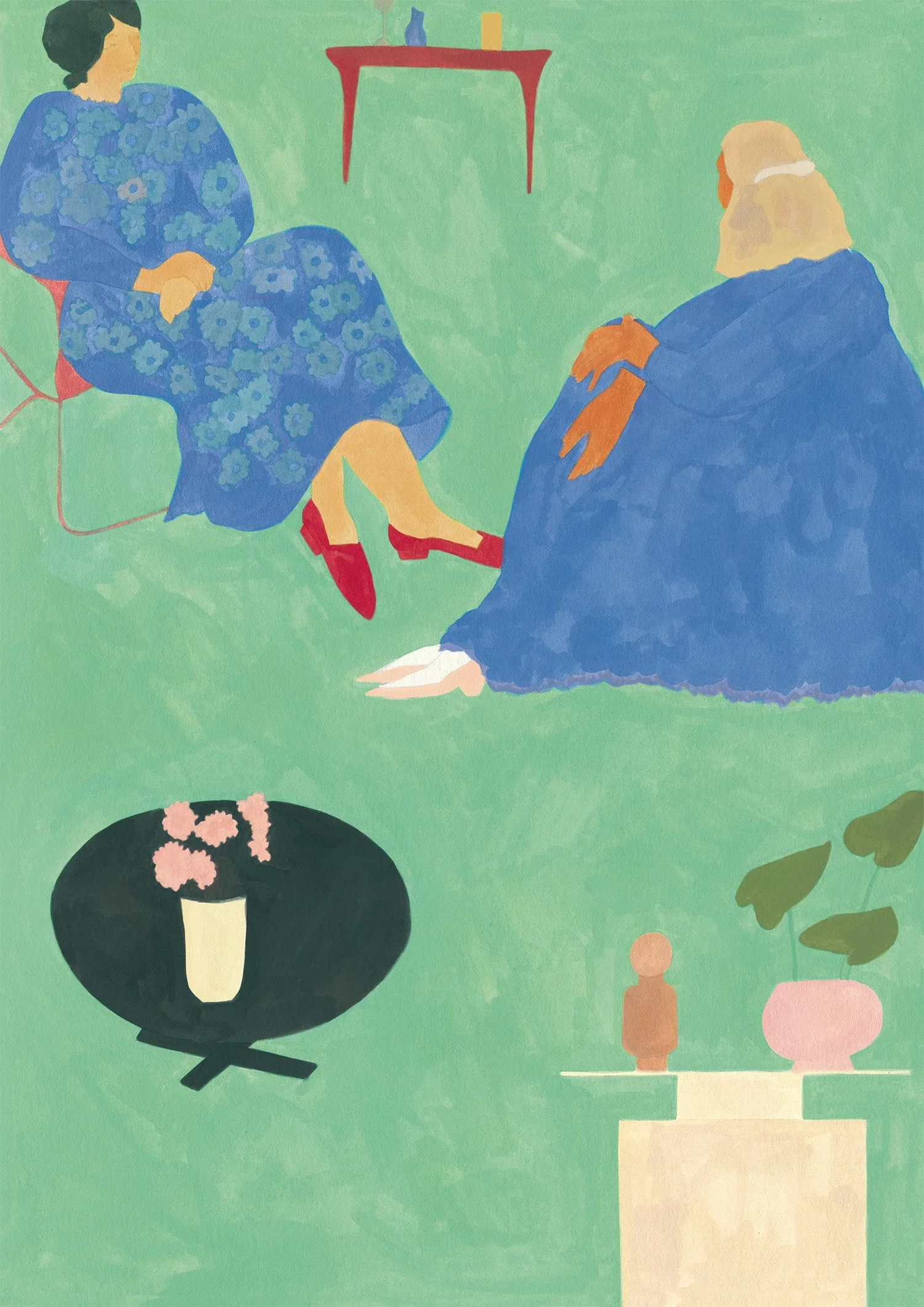
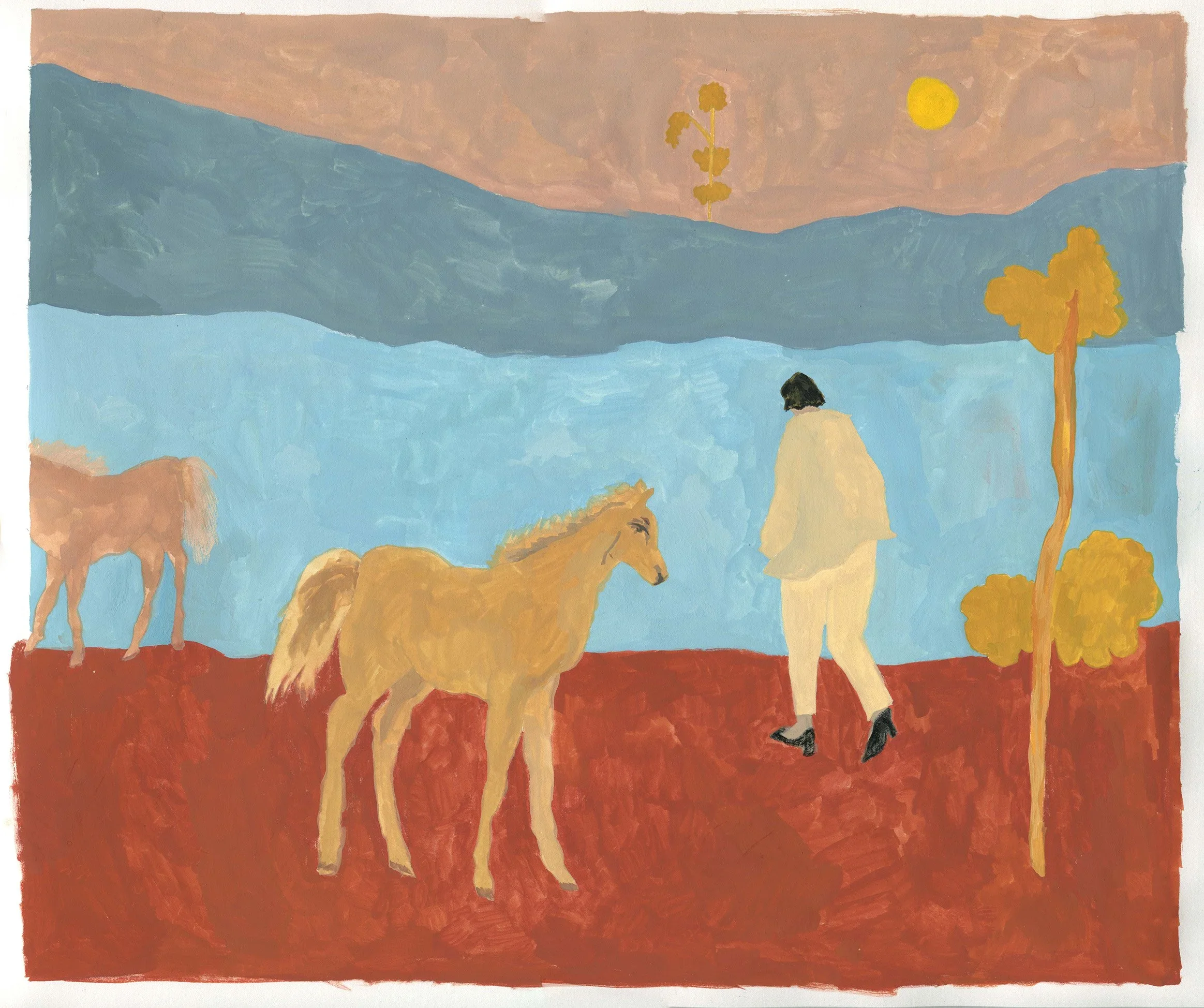
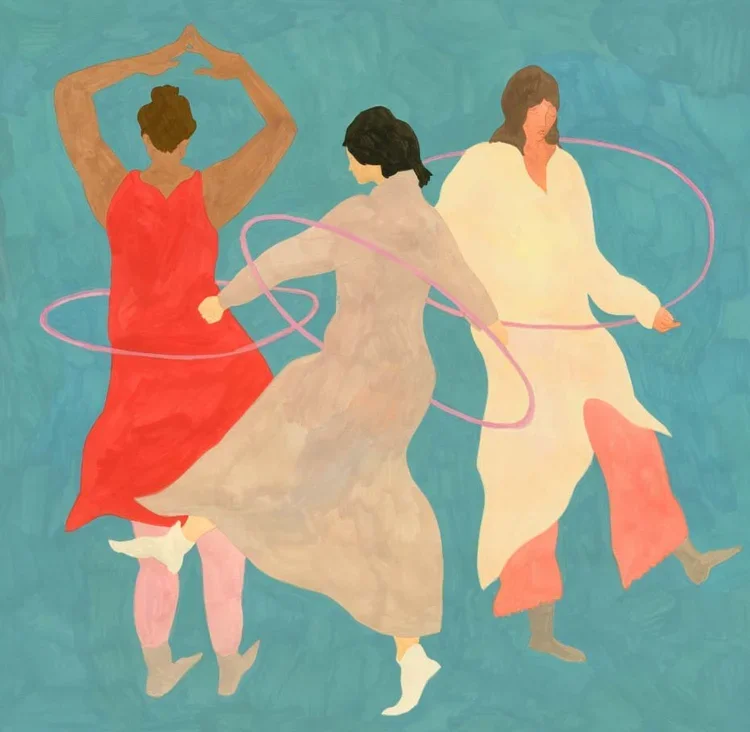
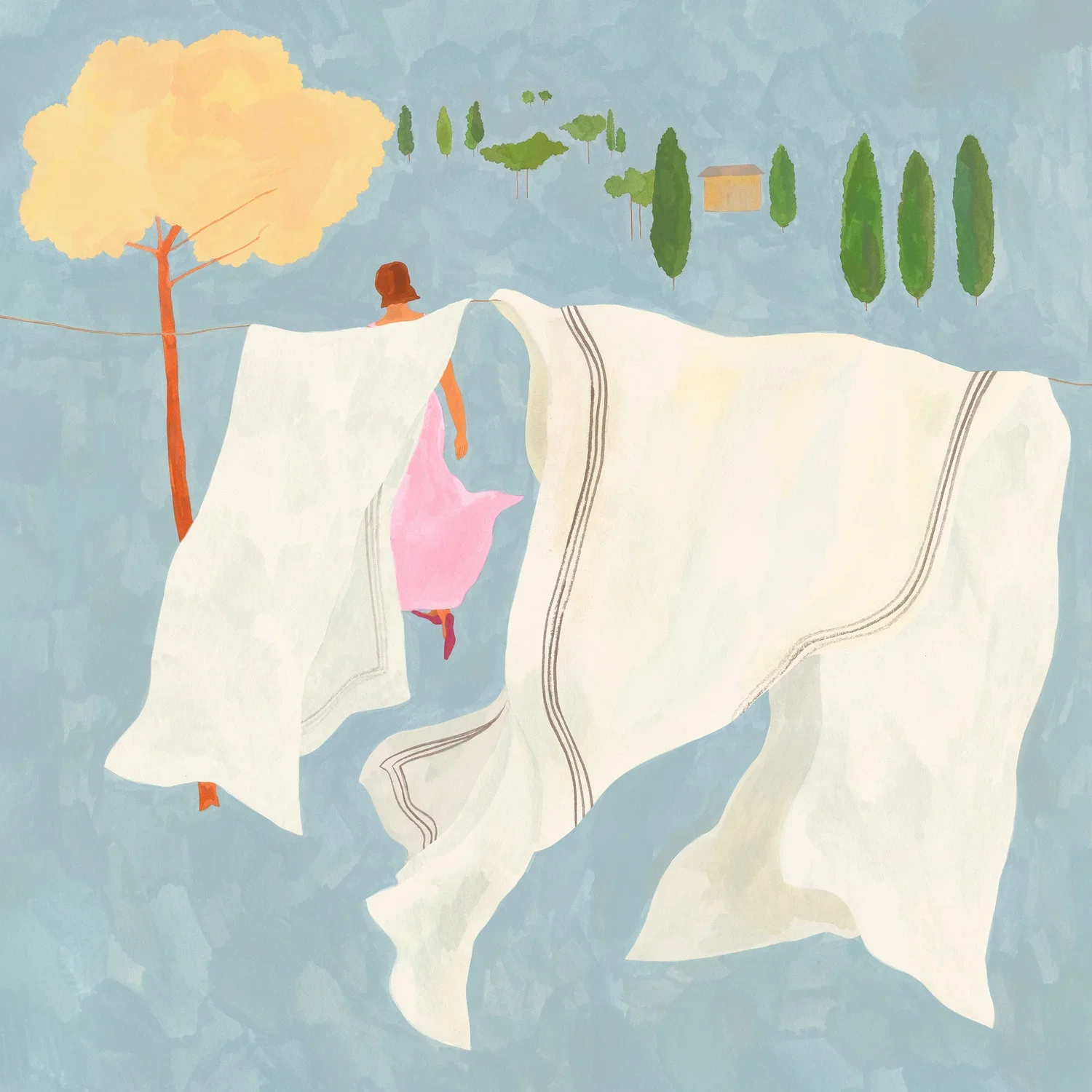
7. Most of your work is made in goache, what is it about that medium that attracts you?
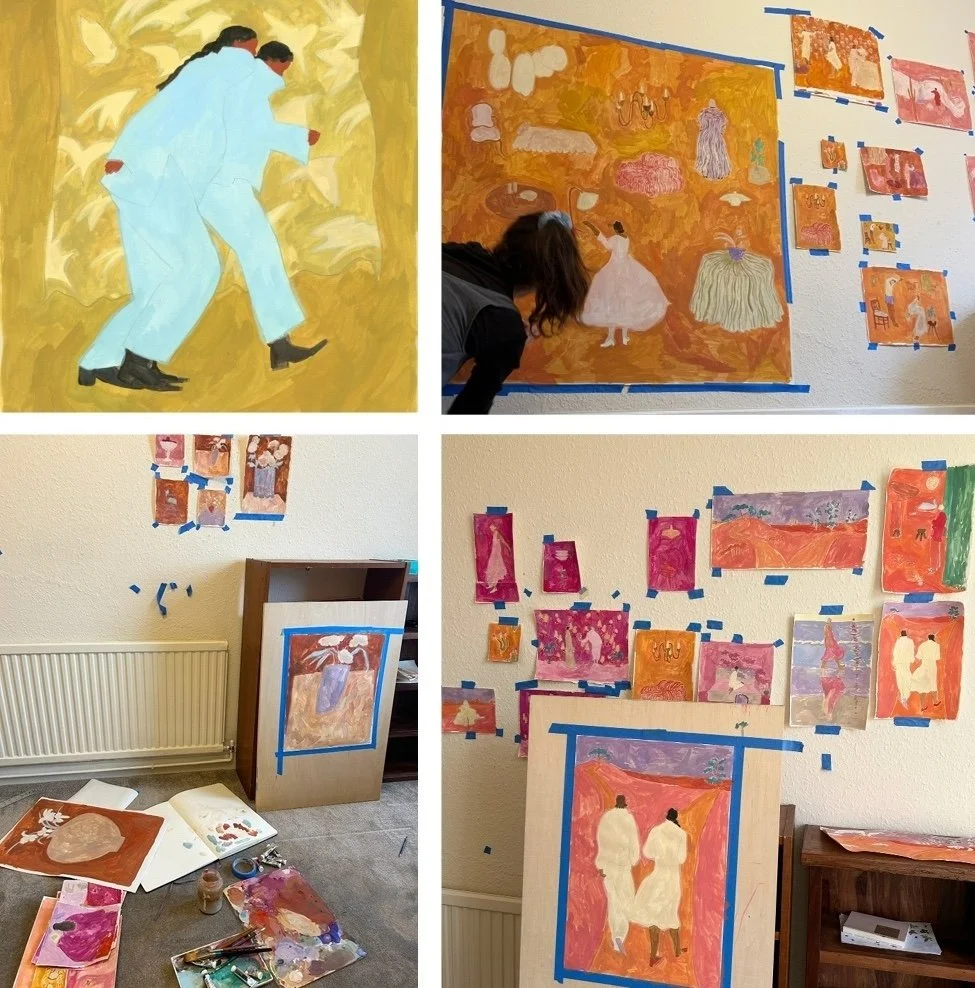
I love how fast gouache is to work with—the colors are really bold but still feel natural, and the brushstrokes have a strong presence. And you can also see the pencil lines underneath.
I always plan ahead before painting because everything shows through, and you can’t build too many layers without it getting muddy. But that’s also what gives it its lightness and freshness.
8. Are there specific types of spaces you love working in?
Since I work with paint and brushes, my study is the most comfortable place for me to work. Sometimes, I’ll go to a café to read a brief or visit certain places to gather references, just to get out a bit. But most of the time, I work alone in my room—and I usually like it.
9. What are the most important things for you to have in your artistic space?
Nothing too special—some books and magazines, equipment for doing some stretches on breaks, nice ceramics for nuts to snack on, and way too much tea. A big wall for working while standing and a window are important too. Also a sewing machine that unfortunately doesn’t get much use.
10. What does a typical work day look like for you?
I usually start the day with an hour-long walk—or a tiny bit of running—in the park, then I get to work while listening to an audiobook. If there’s something urgent, I’ll tackle that first, but if not, I’ll set aside time for quick sketches, gathering references, or working on a bigger piece.
I take breaks for stretching or rest, then at 3:45, I head out to pick up my two boys from nursery. In the evening, I usually get back to work for a bit, answering emails, etc.
11. What have been your favorite collaborations?
I’ll pick something from a few years ago—three paintings I made for three pieces in the literary section of Port Magazine. I chose these because those were three stories I remember as being really good, and the imagery was beautiful, with such interesting connections between them, and the printing was so nice! But mostly, I pick it because it was the first project that felt like that—interesting, beautiful, with a lot of freedom, and a series, which is always more fun than just one image. There were other projects after that, but this one stands out as the first and special.
12. What is your dream collaboration?
Theater or dance! But I also always love working on print projects.
13. What have you been the most curious about lately?
Lately, I’ve been really curious about how much you can stretch the space between a character and objects while still making it feel like a real space. How much background can you have relative to the size of the objects and characters? What is the relationship between a character and the objects around it, when they become similar to each other?
14. Thank you for your answers! Any final words you'd like to add?
Thank you so much for the questions!! I’ve probably said too much already :)