

Annabel Briens
From the time she joined our agency, we’ve been captivated by the understated glamor of Annabel’s illustrations – and subsequently transfixed by their hold on us. We caught up with Annabel at her studio in France, where she talks nostalgia, inspiration, film, and things that last…
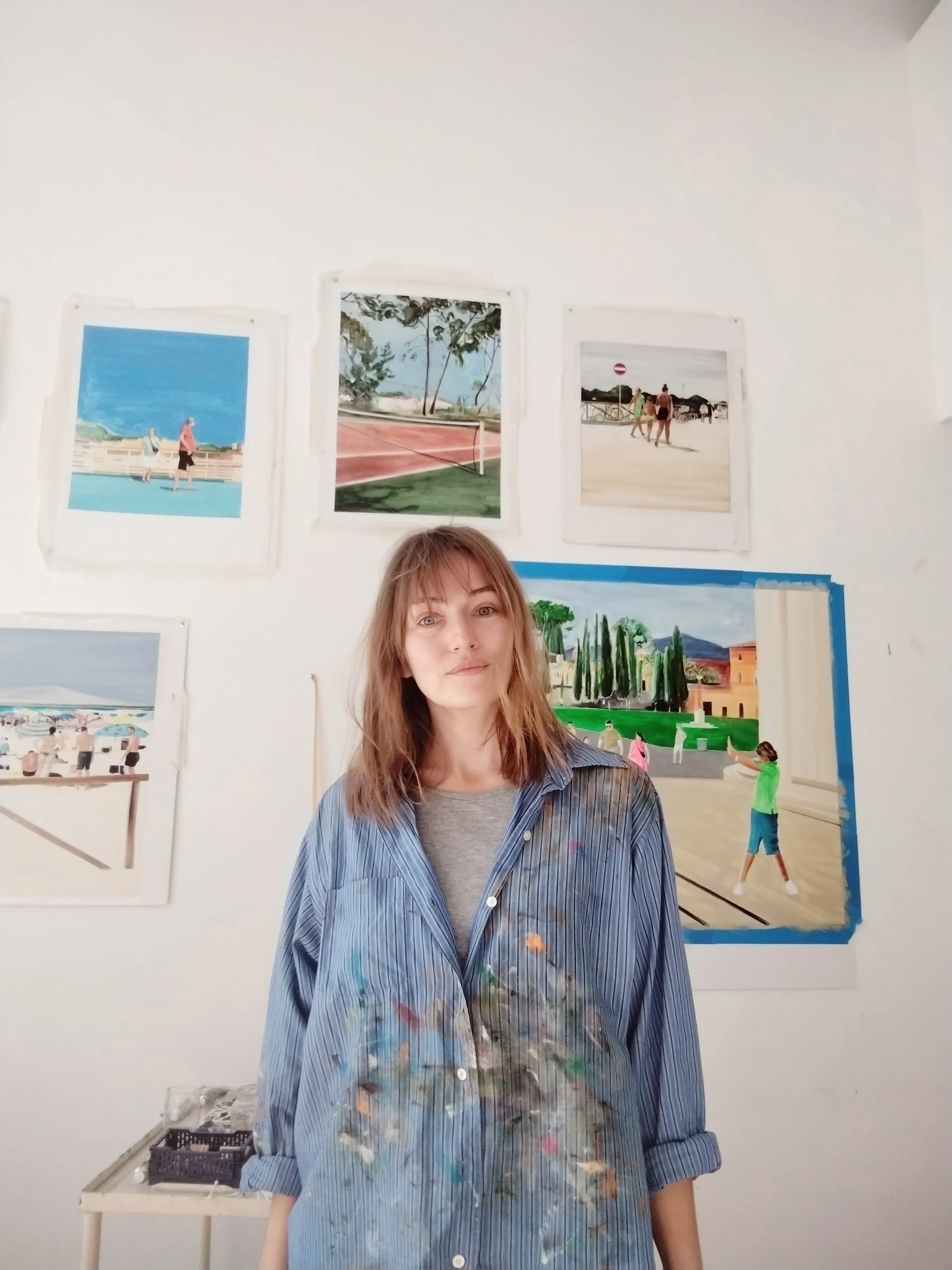
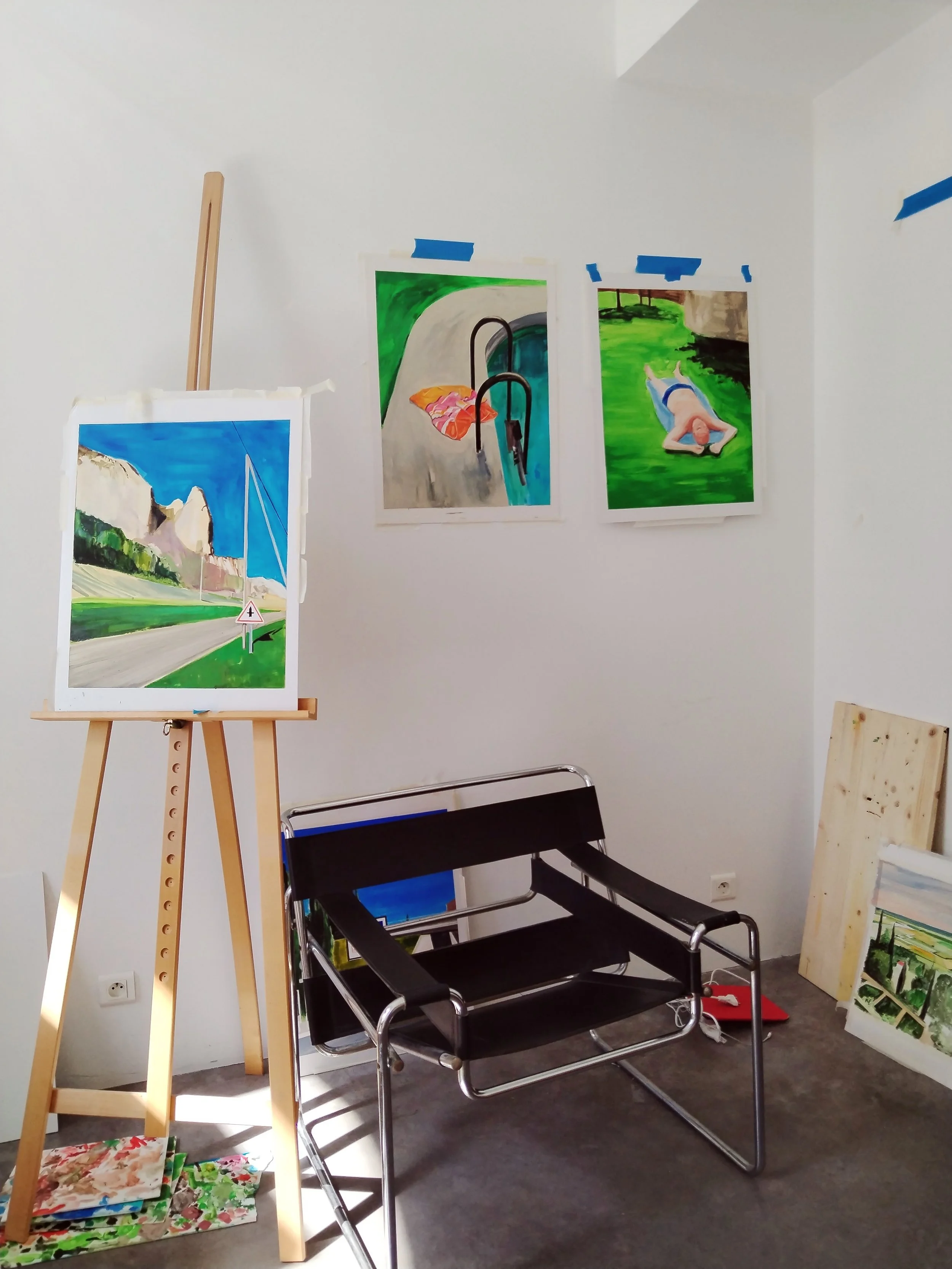
1. How did you get your start as an illustrator?
I paused my graphic design studies to really devote myself to drawing and painting because I realized I wanted to become an illustrator. It was by discovering the work of Stina Person in a book dedicated to fashion illustration that I said to myself, "ah but illustration can be that too, it's very free, it’s for clients but also very close to painting” so I was inspired to consider it as a career.
2. Have you always lived in France?
I lived in mainland France except for one year on the island of Mayotte in the Indian Ocean 15 years ago.
3. Tell us about your studio.
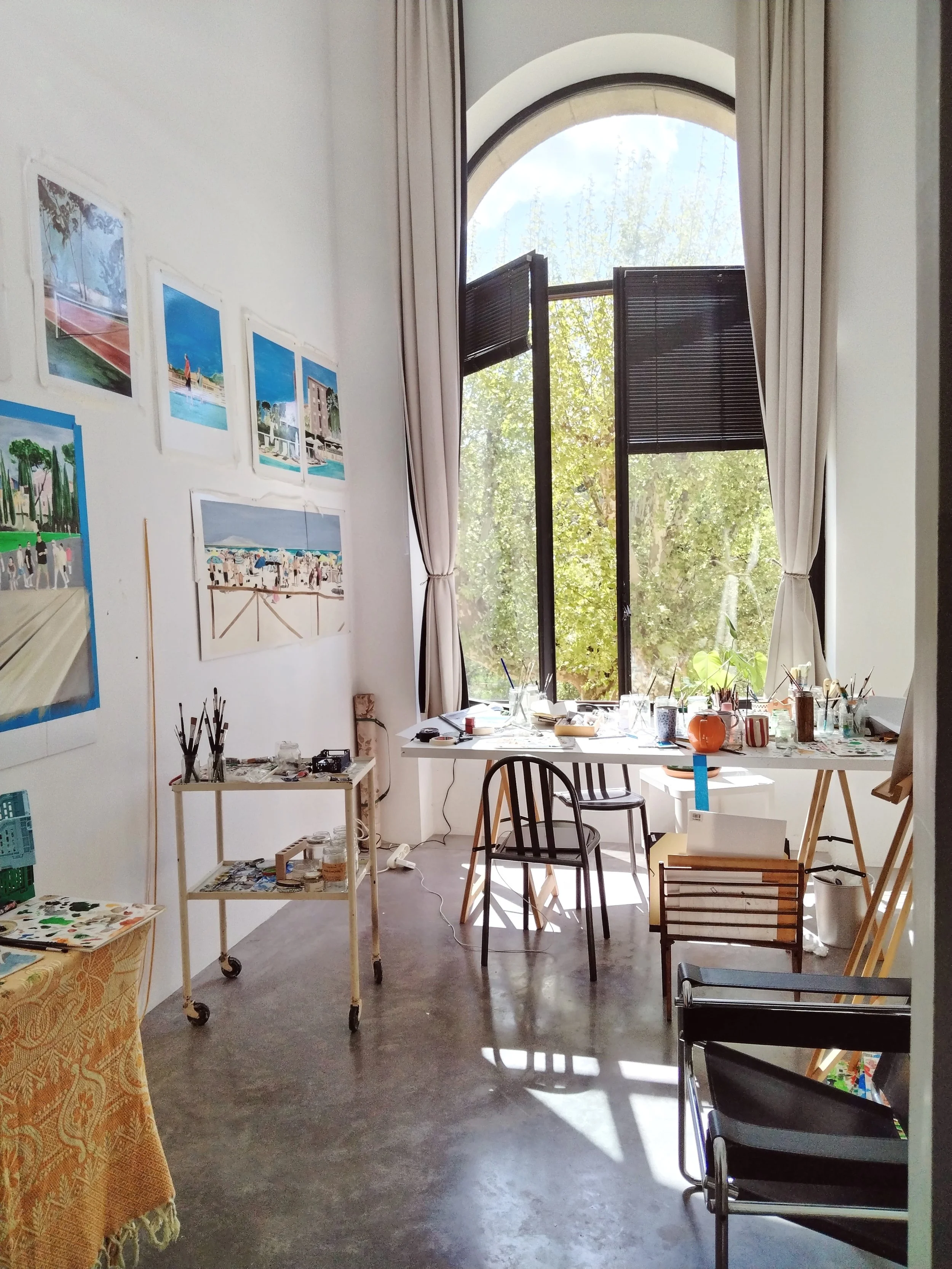
Three years ago I left Paris and settled in a small village in Provence. My studio is a place that I find magical: it is bathed in light, it is located in an old silk factory and its walls are 8 meters high! I have a huge window which overlooks century-old plane trees which I watch with immense joy as they evolve with the seasons. It’s so inspiring!
4. The paintings in your body of work seem infused with memory – as though the viewer themself is recalling a scene or face that they have experienced. Can you tell us a bit about how you create an image and translate real-world subjects into such fluid, arresting visuals?
I'm naturally nostalgic and at the same time amused so I think that's what I try to reflect in my work. I'm sad about the way landscapes are often destroyed by development. I think we can feel this nostalgia but at the same time have curiosity and amusement about the modern world.
5. How do you start a piece? And what is your process? From the moment of receiving a brief, or a spark of inspiration, how do you move a piece from sketch to completion?
I take a lot of photos, I also do research on the internet and then I start by drawing, either on the iPad if time is short or in oils if time permits. I can't start without photos, I can't draw from memory.
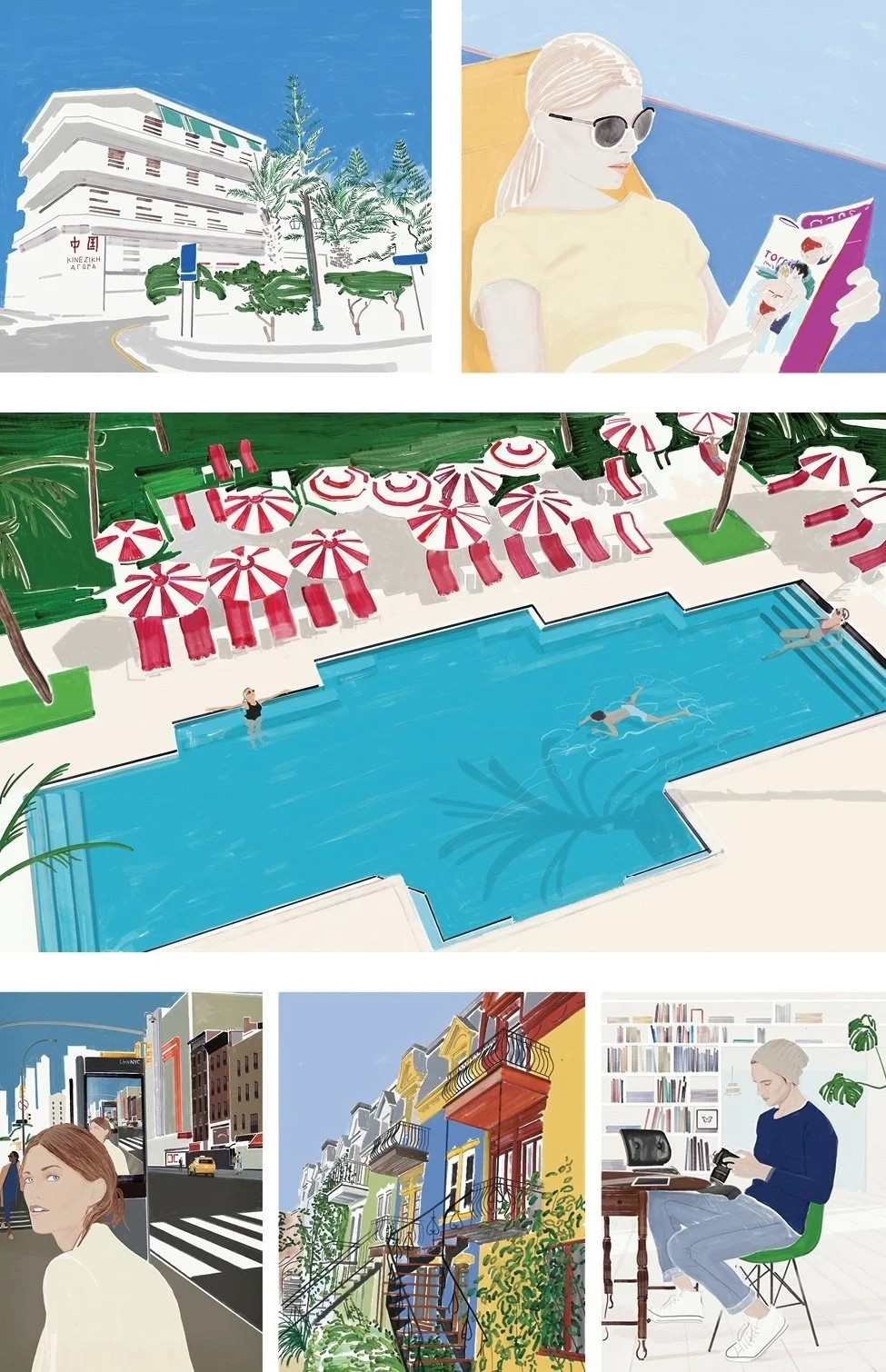
6. Tell us a bit about the hotel project you recently completed.
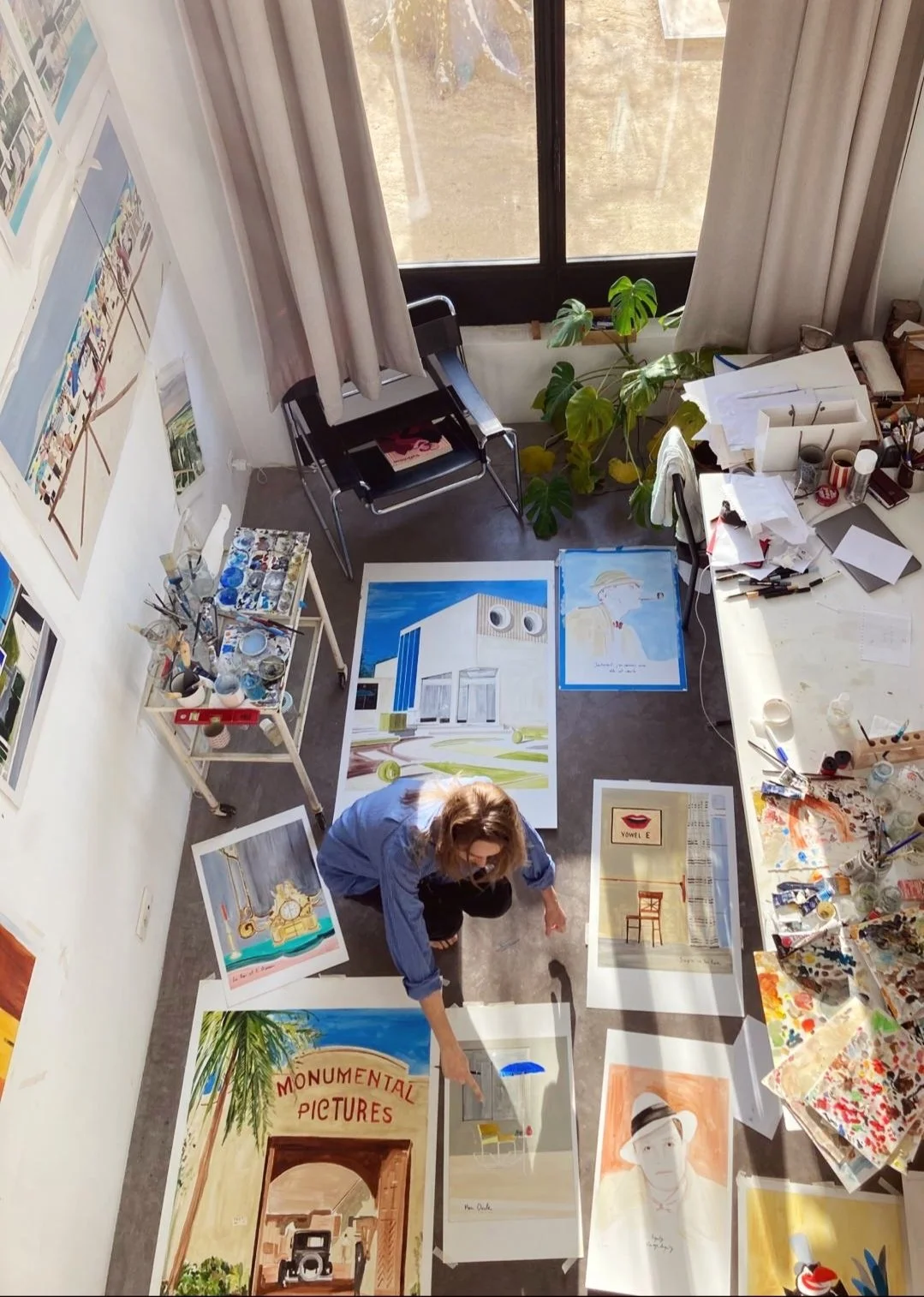
It was for a luxury hotel in Casablanca where I created 3 triptychs. The brief was inspired by three films: Mon Oncle, Singin' in the Rain and The King and The Bird. I watched the films and took screenshots each time I saw an image that inspired me, then I sent these captures to the client, adding text taken from the film. What started as pencils then became large oil paintings… the formats were as big as the deadline was short, but it was very exciting to do, I loved it!
7. How has the illustration industry shifted since you began?
It's difficult for me to say as I myself have evolved a lot. I discovered the iPad seven years ago, around the time I started working with Elle magazine, and it allowed me to respond and work much faster. I would say that what has changed more than anything is the deadlines, I get the impression that they’re only getting tighter and tighter! Also for the last 2 years there are many project requests that have not ultimately come to fruition, perhaps due to the context of everything going on in the world around us creating so much uncertainty.
8. What have some of your favorite collaborations been?
I really liked the collaboration with the Le Mont Saint Michel fashion brand which lasted a few years, and where there was a real human connection. Also my long-running collaboration with Elle magazine, and a big thank you to Geneve Doherty, the artistic director of the era! This collaboration made me evolve a lot, and it was great to see my work progress over the time we worked together.. I always enjoy any projects working with decorators, and. I love when a project calls for original artwork, I like to think of my pieces as objects that will remain in place even after the job is finished.
9. And what would your dream collaboration be?
The cover of The New Yorker of course!
10. Who, or what, are some of your greatest inspirations, and why?
My original inspiration is from paintings by artists including Matisse, Peyton, Hockney, Valloton and De Stael and includes subjects like landscapes, architecture and portraits.
11. What advice do you have for emerging illustrators? What are your three ingredients for a successful life in the arts?
Think about your style, make it recognizable and personal but also usable for projects. My main advice is to work and believe in it. There is a lot of competition out there, and many talented people, but not everyone has the faith.
12. Anything else you'd like to add?
Thank you Illustration Division Team and enjoy Spring!